DEI VOX
DEI VOX INDIA
DEI VOX INDIA
BCP SPECIALIST INDIA
India's most trusted BCP specialists — overhauling, repair, in-situ machining & spare parts. ISO certified. 24/7 support.
TECHNICAL OVERVIEW
A Boiler Circulation Pump is a high-pressure centrifugal pump installed within the boiler circuit of a steam power plant — maintaining forced circulation of water through the evaporator tubes and boiler drum.
SYSTEM REHABILITATION
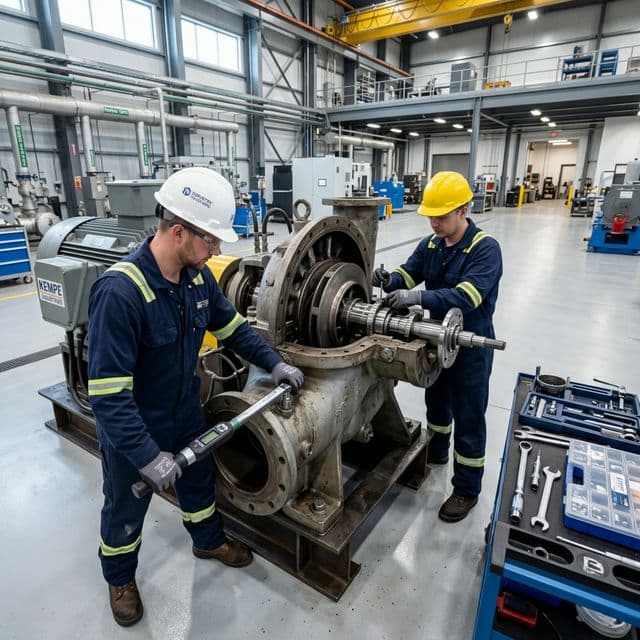
BCP Overhauling
BCPs typically operate under extreme conditions: system pressures from 100 to 200+ bar, water temperatures approaching saturation point, and continuous duty cycles with minimal planned downtime.
Most modern BCPs use a canned motor or wet motor design where the rotor operates submerged in process fluid — eliminating mechanical shaft seals and associated leak risk at high pressures.
DEI VOX CAPABILITIES
A comprehensive suite of services around the Boiler Circulation Pump lifecycle — built on direct field experience across multiple plant types and pump configurations.
Complete strip-down, component inspection, dimensional measurement, and restoration to original tolerances. Includes impeller reconditioning, bearing replacement, can liner inspection, and full-load performance testing.
Precision in-situ machining of pump casings without removing them from the boiler piping — minimising plant outage time and risk when BCP casings develop leaks at flange faces or body joints.
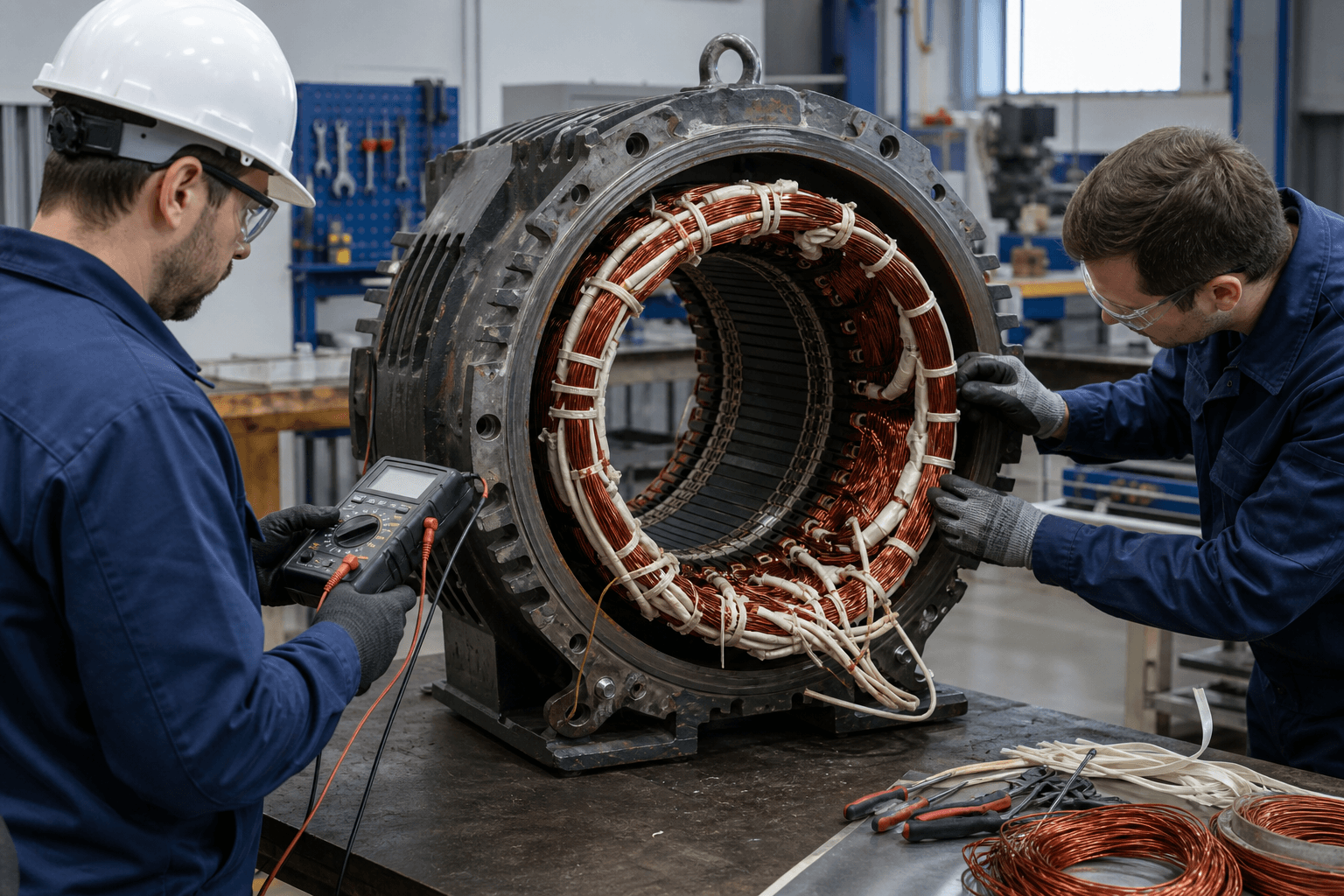
Rewind of canned motor stators using high-temperature insulation rated for continuous immersion in hot process water. All rewinds are tested to IEC standards with IR, hi-pot, and surge comparison testing.
OEM spare parts for older BCP models are frequently discontinued. DEI VOX uses reverse engineering to recreate precise dimensional replicas of impellers, wear rings, bearing housings, and can liners.
WHERE WE OPERATE
From thermal power stations to refinery steam generators — Boiler Circulation Pumps are critical infrastructure that Dei Vox is trusted to maintain.
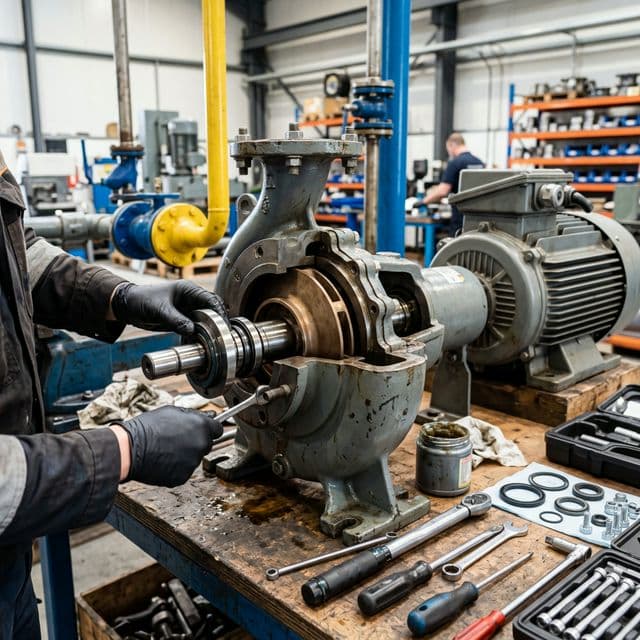
FIELD OPERATIONS
Pan-India Reach
MAINTENANCE FRAMEWORK
01
Vibration, temperature, and differential pressure trending to detect bearing degradation or flow disturbances early.
02
Maintain oxygen levels, pH, and conductivity within boiler water quality standards to minimise corrosion of motor internals.
03
At OEM-recommended intervals or based on condition trigger points — typically every 18,000–25,000 operating hours.
04
Wear rings, thrust bearings, can liner integrity checks at each planned outage to maintain OEM-spec clearances.
05
24/7 on-site support when pump trips or abnormal performance is detected. DEI VOX mobilises within 24–48 hours anywhere in India.
WHY DEI VOX
Our certified engineers can be mobilised to any plant location in India within 24–48 hours for emergency assessment and repair work.
TECHNICAL LEADERSHIP
DEI VOX Engineers
ISO Certified
FREQUENTLY ASKED
Q1
A BCP is a specialised centrifugal pump that circulates water through the boiler drum and evaporator tubes of a high-pressure steam boiler. It maintains controlled water flow rates to ensure uniform heat transfer, prevent tube overheating, and protect the boiler from thermal stress.
Q2
Typical overhaul intervals range from 12,000 to 24,000 operating hours depending on water chemistry, operating pressures, and manufacturer recommendations. DEI VOX recommends a condition-based maintenance approach with regular vibration monitoring and seal inspections.
Q3
Yes. We have extensive experience overhauling BCPs from all major OEM manufacturers including KSB, Sulzer, Weir, BHEL, and imported units. Our reverse engineering capability also enables us to produce hard-to-source spare parts for legacy pump models.