BCP Can Liner Failure and Repair
Direct Answer
A BCP can liner can fail through corrosion, erosion, fatigue, rubbing, manufacturing defects, or damage during dismantling and assembly. Even a small pinhole can expose the stator insulation to process fluid. Repair begins with locating the defect, establishing its cause, checking surrounding material, and deciding whether an engineered local repair or complete liner replacement is appropriate.
Symptoms and Likely Causes
- Falling insulation resistance or earth-fault trips after stable service.
- Moisture or process-fluid evidence in the stator area.
- Local rub marks caused by excessive bearing clearance or rotor contact.
- Pinhole indications associated with corrosion, inclusions, or fatigue.
- Distortion, cracked welds, or leakage after thermal cycling.
Inspection and Diagnostic Process
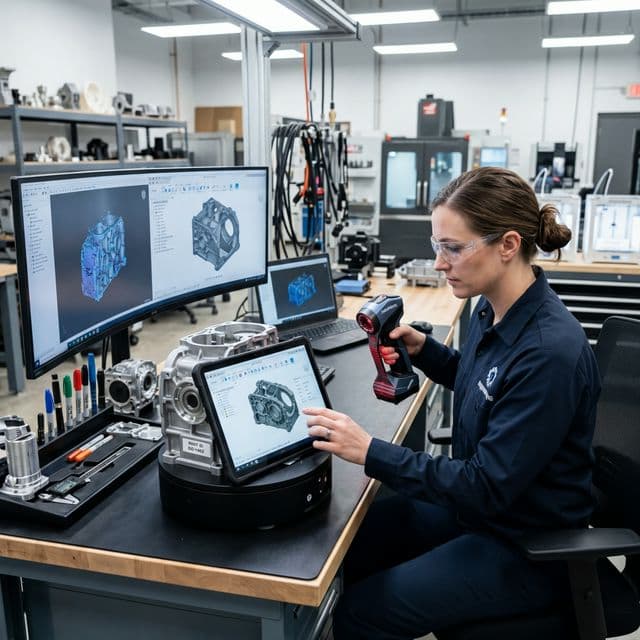
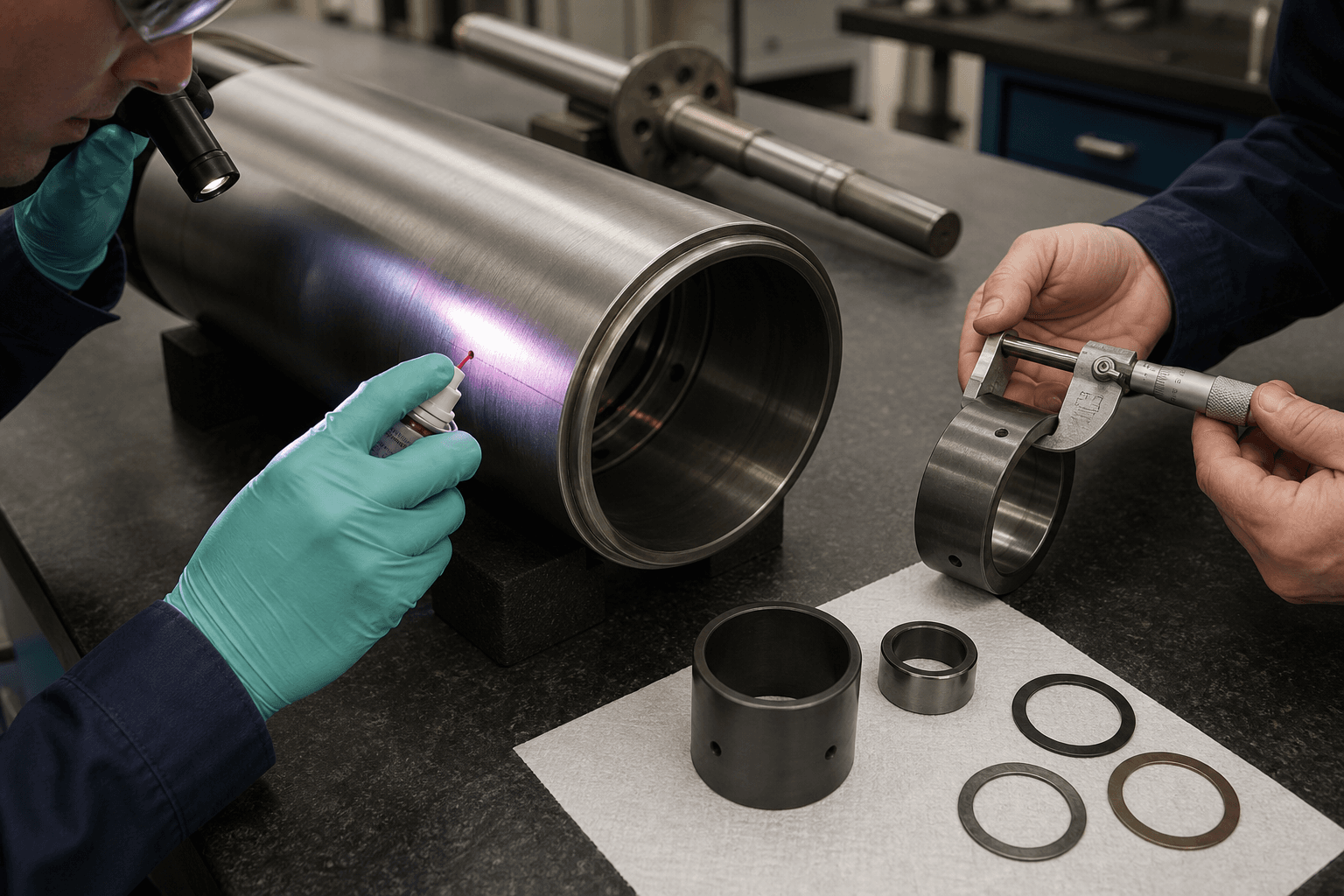
Start with visual inspection under strong lighting and magnification. Use a suitable leak test and nondestructive examination method approved for the liner material and thickness. Dye penetrant can reveal surface-breaking flaws, while pressure-decay, vacuum, helium, or other sensitive leak methods may be selected by the repair specification. Measure liner geometry and check rotor-to-liner clearance because replacing the leak without correcting rubbing or bearing wear invites repeat failure.
Repair Options
Localized repair may be possible when the material, defect position, remaining thickness, and approved welding procedure allow it. Extensive corrosion, multiple indications, distortion, or uncertain integrity generally favors replacement. A replacement liner requires controlled material selection, forming, welding, dimensional verification, surface finish, leak testing, and electrical verification after assembly.
For liner inspection within a complete BCP repair scope, visit our boiler circulation pump repair service page.
FAQ
Can a can-liner pinhole be welded?
Sometimes, but only after engineering review of material, thickness, defect cause, access, and an approved procedure. Replacement is often more reliable when damage is widespread.
Why must bearings be checked after liner rubbing?
Excessive bearing clearance or rotor displacement may have caused the contact. Repairing only the liner leaves the root cause unresolved.
Published by DEI VOX Mechanical and Electrical Inspection Team
Canned-motor inspection, liner assessment, dimensional control, and leak testing
Published: June 12, 2026 | Updated: June 12, 2026