Understanding Boiler Circulation Pumps (BCP) in Thermal Power Plants
The Role of BCP in Thermal Power Generation
In a modern steam-generating boiler, water circulation is the lifeblood of heat transfer. Forced circulation boilers rely completely on Boiler Circulation Pumps (BCP) to pump water through the evaporator tubes lining the furnace walls. Unlike natural circulation which relies solely on density differences between hot and cold water, forced circulation guarantees a uniform flow rate, protecting boiler tubes from local thermal spikes, overheating, and eventual rupture.
A typical BCP operates under severe mechanical and thermal conditions: - System Pressure: 100 to 220 bar (high pressure) - Fluid Temperature: 300°C to 365°C (saturated water) - NPSH margins: Near zero, making the pump highly susceptible to cavitation if suction pressures fluctuate.
---
Mechanical Design: The Wet Motor / Canned Motor Configuration
Because of the extreme operating pressures, conventional mechanical shaft seals would fail rapidly or cause unacceptable leakage rates. To solve this, most modern BCP designers use a Canned Motor Pump or Wet Motor Pump design.
In this layout, the pump casing and the electric motor housing are directly bolted together to form a single, hermetically sealed pressure vessel.
1. The Stator Can: A thin-walled cylinder of stainless steel or hastelloy (usually 0.3mm to 0.5mm thick) separates the motor stator windings from the rotor. 2. Process Fluid Lubrication: The rotor runs fully submerged in the process water (or a separate auxiliary cooling water loop), which also lubricates the sleeve and thrust bearings. 3. No External Seals: By placing the entire motor inside the pressure boundary, there is zero risk of high-pressure leakage to the environment.
---
Common Failure Modes in BCP Systems
Despite their robust hermetic design, BCPs are prone to specific failure modes due to the harsh operating conditions:
1. Sleeve and Thrust Bearing Wear Since the bearings are lubricated by the process fluid, any degradation in boiler water chemistry or the presence of suspended iron oxide (magnetite) particles can accelerate bearing wear. Increased bearing clearance leads to shaft vibration, stator contact, and eventual catastrophic stator burn-out.
2. Stator Can Liner Perforation Thermal cycling and pressure pulsations can cause mechanical fatigue or pinhole corrosion in the thin can liner. Once the liner is perforated, high-pressure hot water enters the stator winding cavity, immediately causing insulation failure and a phase-to-ground short circuit.
3. Impeller Cavitation and Erosion Operating close to the saturation curve means that minor pressure drops in the suction line can trigger flashing (vapour bubble formation). When these bubbles collapse against the impeller shroud and vanes, they cause severe pitting, micro-fractures, and loss of hydraulic efficiency.
---
Best Practices for BCP Maintenance
To achieve the design lifetime of 18,000 to 25,000 operating hours between major overhauls, plant operators must implement a proactive maintenance strategy: - Vibration Analysis: Continuous monitoring of casing vibration levels to detect early signs of bearing wear. - Water Quality Controls: Maintaining oxygen scavenging, pH levels, and silica limits within strict boiler water limits to minimize magnetite formation. - Scheduled Mid-Life Inspections: Pulling the motor unit during planned unit outages to check bearing clearances, thrust disc wear, and can liner integrity.
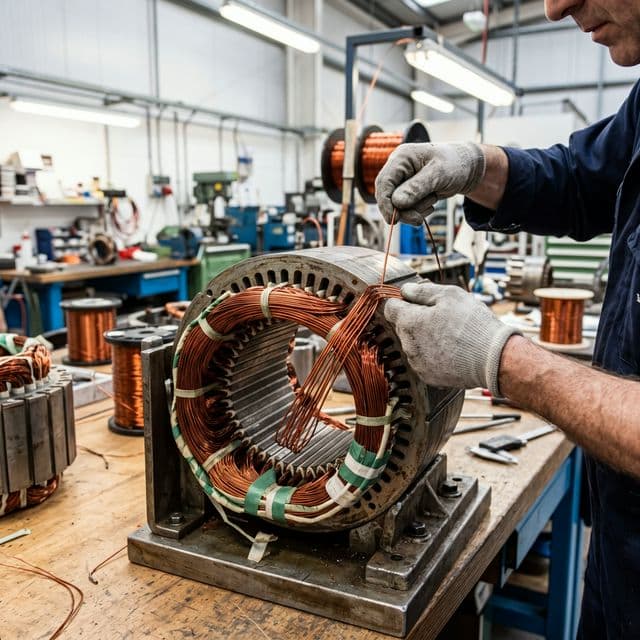
DEI VOX India specializes in the diagnostic assessment, motor rewinding, can liner fabrication, and full-load testing of BCP units. Partnering with a dedicated service specialist ensures that your critical boiler assets achieve maximum reliability and zero unplanned downtime.
Published by Engineering Team, DEI VOX
Published: May 15, 2026